When you need an industrial industrial door, you probably first think about the dimensions of the opening. That makes sense. But the space around the door opening is just as important. Many traditional industrial doors take up a surprising amount of space here, which can get in the way or sometimes even prevent them from fitting.
This page helps you understand why space above the door is so valuable and what smart alternatives are available to make the most of that space.
Why is the space around your door so important?
In many commercial buildings, the space around the door is not ‘empty’ space. On the contrary — it often contains:
- Installations such as lighting, sprinklers or ventilation
- Cranes, conveyor belts or other internal logistics systems
- Cable ducts and piping
- Low roofs or sloping roof lines (which can make installing an industrial door more difficult)
A standard sectional door, for example, slides horizontally or vertically along the façade or ceiling, which takes up space. Valuable space. And when you don’t have that space, it quickly becomes a puzzle or you end up with more expensive options.
What exactly is the situation with roller doors and sectional doors?
When considering the space above your industrial door, you usually end up with two traditional options: roller doors and sectional doors. Both have their own advantages, but they also take up space in places where space is often scarce in modern industrial buildings. This can quickly raise the question: ‘Which industrial door is suitable for limited ceiling space?’
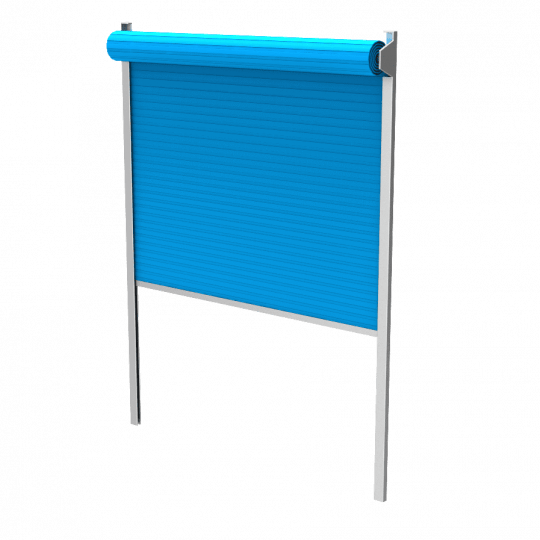
Roller shutter door
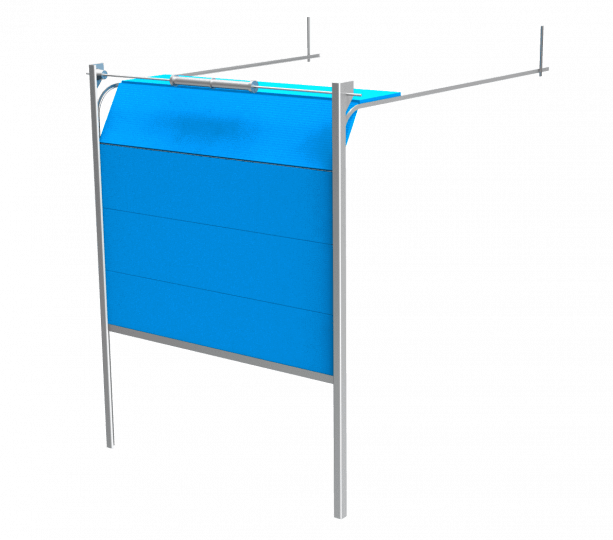
Sectional door
Roller shutter doors
Roller doors are often the most obvious choice for industrial doors in order to save space above the doorway. Roller doors are robust and cheaper than sectional doors, but they are not always the most elegant choice in terms of aesthetics and integration. However, you may encounter the following problems with a roller door:
- Poor insulation
- Noisy
- Less aesthetically pleasing than a sectional door
Sectional doors
A sectional door is an industrial door that slides up along the ceiling on rails. This type of door is often slightly more expensive than a roller door, but it does give a more professional look and offers the option of a wicket door. Sectional doors also provide better insulation than roller doors. However, sectional doors can also encounter the following problems:
- No space for the necessary rails along the ceiling
- Difficult to install on sloping roofs or low ceilings
- Require regular maintenance due to the balance and torsion springs required for the system
The solution: a door that folds itself
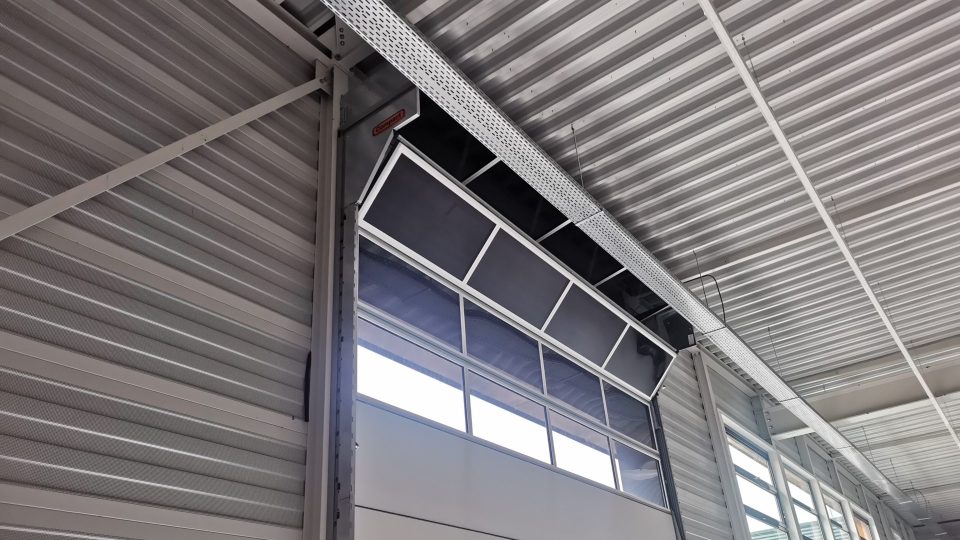
The Rolflex Compact door works differently. Very differently. The Compact door combines the advantages of both roller doors and sectional doors. This makes it an excellent option when space around the opening of your industrial door is limited.
Instead of sliding up or rolling up, the door folds up above the opening. This means that no ceiling rails are required to install the door.
What does that yield?
- Maximum free space around the door
- No interference with lighting, pipes or equipment
- A sleek, tidy appearance
- More design freedom for architects
- More flexibility for contractors during installation
- A practical solution for end users with limited space
This makes the Compact door an ideal solution for tight installations, renovations, modern designs or high-tech environments.
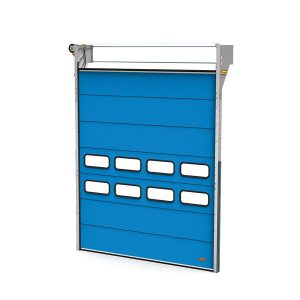
Compact door
The result: more usable space and a more attractive finish
By eliminating the need for rails or roller mechanisms at the top, you create:
1. More space for technology and installations
Everything you need above/behind the door: lighting, ventilation, ducts, taps: remains accessible.
2. More design freedom
For architects, this means: no unsightly lines, no restrictions.
The façade remains sleek, and everything inside remains clean.
3. Greater efficiency in installation
Contractors need to make fewer adjustments, so installation is faster and without surprises.
4. Greater functionality for users
In production halls, distribution centres, showrooms or workshops, the space above remains available for what is really important.
Would you like to know whether your situation is suitable for a Compact door?
Whether you are developing a new building, renovating an existing one, or searching for a door that fits within a confined technical space, we are pleased to assist you.
📩 Contact us for tailored advice
📐 Request technical drawings or documentation
📷 View practical examples of similar installations on our website
🛠️ Design your own door in the Rolflex Configurator and immediately discover which version best suits your situation