When selecting an industrial door, the available space often determines the type of industrial door chosen. In many commercial buildings, the ceiling is often equipped with technical installations or structures. This can lead to problems with the installation of industrial doors.
On this page, we explain why traditional overhead doors are not always suitable, which ceiling obstacles can cause problems, and why the Compact door is a smart solution in many of these situations.
What kind of obstacles on the ceiling can cause problems when installing an industrial door?
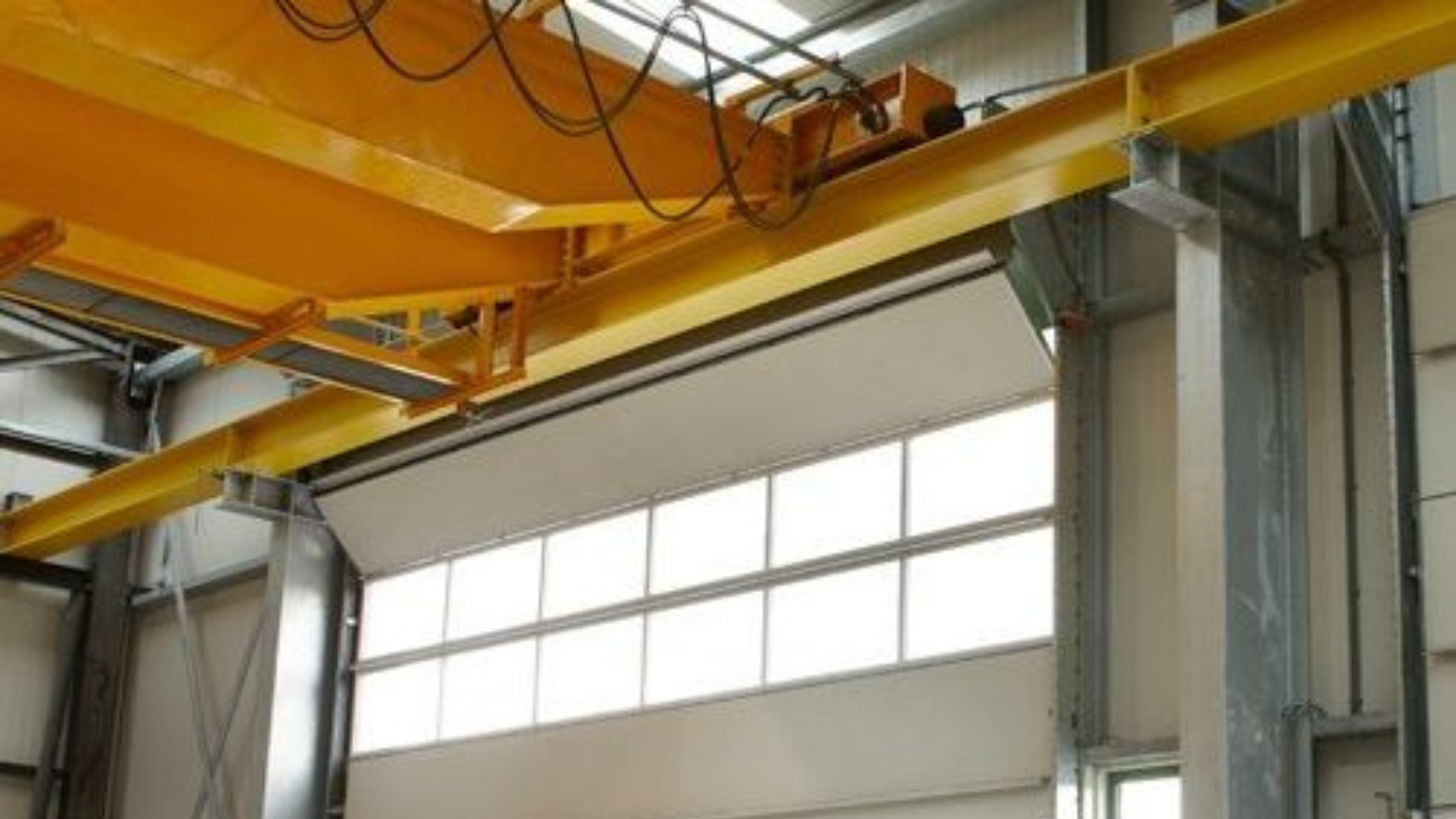
Industrial and commercial buildings often have many different ceiling obstacles that make it difficult to install a standard industrial door, such as:
- Pipes and tubes for water, compressed air or gas
- Ventilation ducts and air handling systems
- Sprinkler systems and other fire safety equipment
- Crane tracks or hoisting equipment
- Lighting, cable ducts and data networks
- Structural beams or suspended ceilings
These obstacles make it difficult or even impossible to install rails under the ceiling without major modifications.
This often proves to be a limiting factor in the choice of a traditional sectional door, particularly in existing buildings and renovation projects.
Why are traditional overhead doors often unsuitable for ceilings with obstacles?
Traditional overhead doors and sectional doors open via rails that run under or along the ceiling. The door panels slide horizontally backwards along the ceiling, which means that free space is required above the door opening and along the ceiling.
When obstacles are present, various problems arise:
- Insufficient space for rails and door panels
- Loss of free working height
- Need to relocate or modify installations
- Additional structural work and higher costs
How do roller doors relate to ceiling obstacles?
Roller doors are often mentioned as a space-saving solution for ceiling obstacles. Because the door leaf rolls up into a box above the doorway, no rail system is required under the ceiling. This makes roller doors technically suitable in many situations where the available ceiling space is limited.
At the same time, roller doors also have clear disadvantages. Due to the rolled-up slats, the insulation value is generally limited, which can lead to heat loss and higher energy costs. In addition, roller doors often offer fewer options in terms of sound insulation, appearance and sealing. For this reason, roller doors are particularly suitable for functional applications, but less ideal for environments where comfort, energy efficiency and representativeness are important.
The Compact door as an alternative for ceiling obstacles
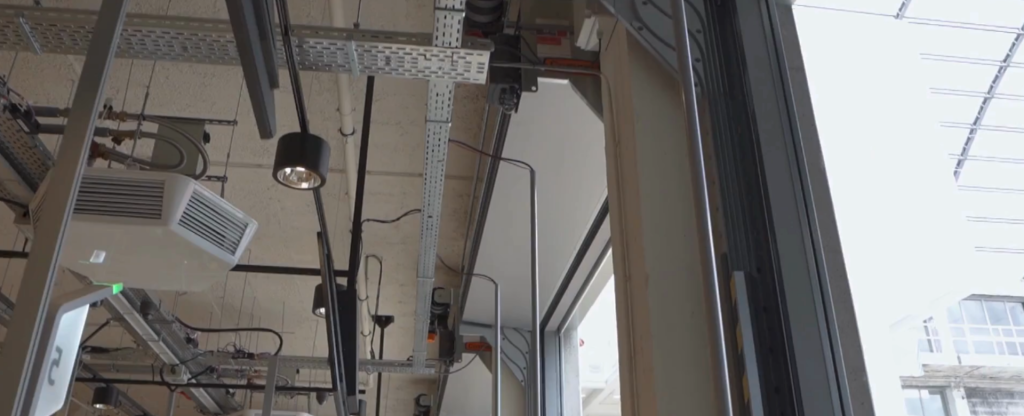
When ceiling space is limited or fully utilised, the Compact door offers a fundamentally different solution than traditional overhead doors.
The Compact door operates with a unique folding system whereby the door panels fold up above the doorway. This eliminates the need for ceiling rails and leaves the ceiling completely free for installations and structures. This makes the Compact door particularly suitable for buildings with complex or full ceilings.
What advantages does a Compact door offer over other solutions?
The Compact door offers several advantages that are particularly relevant in cases where there are ceiling obstacles:
- Unrestricted ceiling space without rails
Installations such as pipes, ventilation and sprinklers can remain where they are.
- Maximum use of space
The full working height remains available, which is important for logistics and internal processes.
- Ideal for existing buildings and renovations
No major alterations to the ceiling are required.
- Good insulation and a smart appearance
The Compact door combines functionality with a neat, professional appearance.
- Low-maintenance design
The absence of balance springs and long rails makes the door reliable and easy to maintain.
- Versatile
Suitable for industrial halls, workshops, showrooms, and other professional environments.
- Many customisation options
The Compact door offers many customisation options, such as an integrated wicket door or full-vision panels.
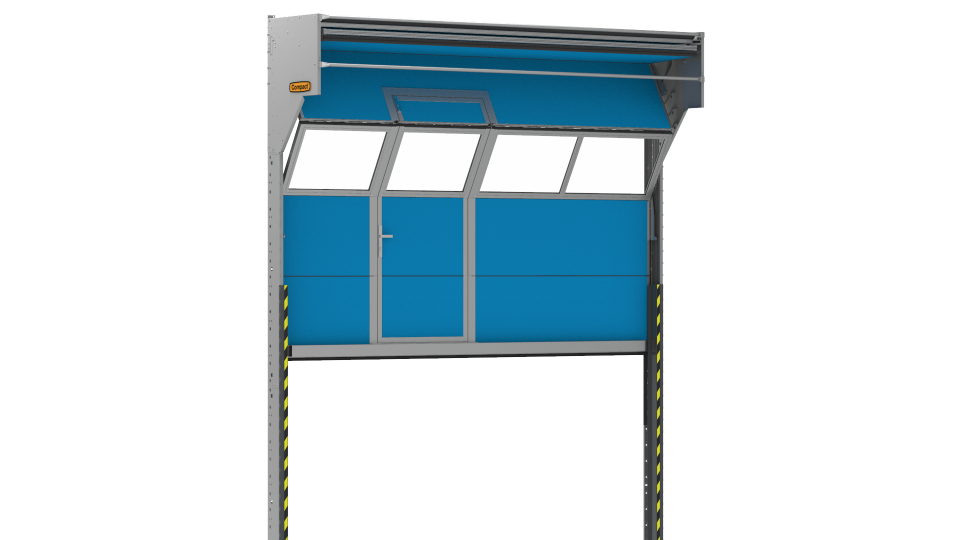
Compact door
Conclusion
What is the best industrial door for spaces with ceiling obstacles?
The best industrial door for ceilings with obstacles is one that does not use rails under the ceiling, thereby making optimal use of the available space. In situations where pipes, ventilation, sprinkler systems or other structures are present, traditional overhead doors are often unsuitable.
The Compact door is an excellent solution in many of these cases. Thanks to the unique folding system above the doorway, the ceiling and working height remain completely unobstructed, while the door offers good insulation, reliable operation and a professional appearance. This makes the Compact door a future-proof choice for both existing buildings and renovation projects with ceiling obstacles.