Commercial buildings often suffer from heat loss due to doors being opened and closed frequently. This can lead to higher energy costs and a less comfortable indoor climate. Choosing the right industrial door for a commercial building is therefore essential to limit heat loss and improve energy efficiency.
How does door type affect heat loss during frequent use?
The type of door largely determines how much heat is lost, especially with intensive use:
- Closing speed: Doors that open and close quickly limit the time that warm or cold air can escape.
- Insulation material: Doors with thermal insulation ensure that the internal temperature is better maintained.
- Sealing: Gaps and crevices cause heat loss; doors with good seals are therefore essential to prevent heat loss.
Industrial doors allow a relatively large amount of heat to escape when used frequently. Automatic high-speed doors or insulated airlock doors significantly reduce this.
Are there specific standards or guidelines for doors in commercial buildings to limit heat loss?
There are no specific regulations in the UK that address heat loss solely for industrial doors. The insulated performance of a door is normally determined by recognised standards such as BS EN (British adopted European standards), which many UK manufacturers follow. However, commercial and industrial buildings must comply with national energy performance requirements under Building Regulations Part L (Conservation of Fuel and Power), and a well‑insulated industrial door can help reduce heat loss and improve a building’s overall energy efficiency.
Building Regulations Part L (Energy Performance)
In the UK, energy performance requirements for commercial and industrial buildings are regulated under Building Regulations Part L (Conservation of Fuel and Power). These regulations apply to both new buildings and major renovations, and require that energy performance calculations are carried out by qualified assessors.
The regulations focus on three key aspects:
- Fabric energy efficiency – the maximum energy needed for heating, cooling, and lighting per m² of usable floor area.
- Primary energy use – the total energy consumption from all sources, including fossil fuels.
- Renewable energy contribution – the minimum share of energy that must come from renewable sources.
For industrial doors, the first aspect, fabric energy efficiency, is particularly relevant. A well-insulated industrial door can significantly reduce the energy required to heat or cool a building, contributing to compliance with Part L requirements and improving overall energy efficiency.
Source: UK Government
How do costs and energy efficiency compare for different door types?
When choosing a door, it is important to weigh up the initial investment against the long-term energy savings:
Traditional roller shutter doors:
Low purchase price, but often poor insulation value. This is because roller doors consist of slats that offer little insulation.
Automatic high-speed roller shutter doors:
This type of door provides better insulation than roller door systems with slats. It also opens and closes quickly, preventing cold air from entering commercial premises. However, these doors are still quite thin, so they do not offer extremely high insulation values.
This type of industrial door excels in terms of insulation. These doors are often more expensive than roller doors. Because the door consists of panels, sectional doors are easy to insulate. One disadvantage is that sectional doors cannot be used in all locations. This is because space is needed along the ceiling to install the sectional door.
The Compact door as an energy-efficient alternative
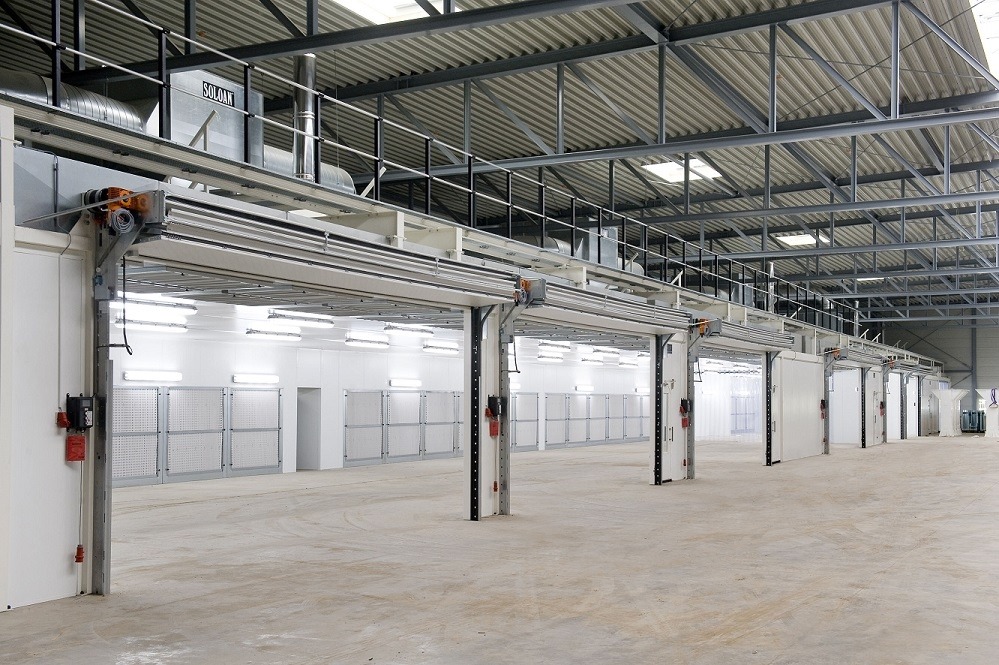
The Rolflex Compact door is an excellent solution for commercial buildings that want to limit heat loss. This door combines speed, durability and optimal insulation, minimising heat loss. Thanks to its compact operation and high-quality seals, energy efficiency remains optimal even with intensive use.
The Compact door, like a sectional door, is made from highly insulated sandwich panels and does not require overhead tracks. This allows it to be installed in locations where a sectional door would not fit, without compromising performance. The insulation value of a Compact door is U = 0.76 W/m²K, measured according to BS EN 12428, the UK-adopted European standard for thermal performance of doors.
In conclusion
For commercial buildings where heat loss and energy efficiency are important, choosing the right industrial door is crucial. The type of door, insulation, seal and closing speed largely determine how much heat is lost, especially with frequent use.
In short: well-insulated, fast-closing doors such as sectional doors or Compact doors are the most effective way to limit heat loss in commercial buildings, save energy and recoup the investment in the long term.