
Door replacement in renovation projects is often driven by necessity. An existing industrial door reaches the end of its lifespan, gets damaged, or no longer meets current requirements.
But replacing an industrial door is more than a technical upgrade—it’s an opportunity to improve how a building functions and looks.
Renovation projects come with constraints. You’re working with existing structures, limited space, and installations that are already in place. These factors often make standard door solutions difficult to apply.
At the same time, they create an opportunity to rethink the approach.
Instead of forcing a standard solution into a non-standard situation, the right door choice can help you make better use of the available space, avoid unnecessary modifications, and achieve a cleaner, more integrated result.
Limited space changes everything
A lack of space above or behind the door opening is one of the most common issues in renovation projects. Existing beams, sloping ceilings, lighting, or other installations often leave little room for a traditional overhead door.
Sectional doors may be the go-to solution when upgrading a building, but they require ceiling tracks, which can limit the available space above or behind the opening. Roller shutter doors can be an alternative, but when insulation, windows, or a wicket door are required, they often fall short.
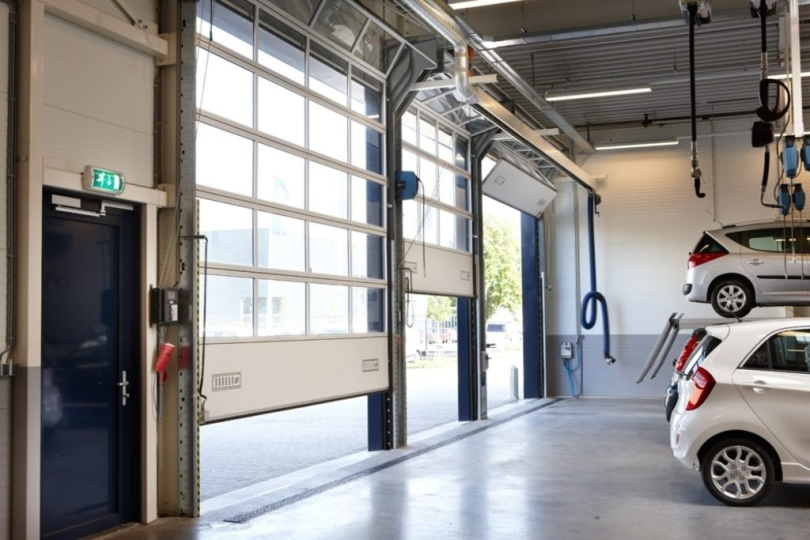
A Compact industrial door works differently. It folds vertically just above the opening, without running tracks along the ceiling. This makes it possible to install a fully functional industrial door even where space is limited—making it a natural fit for renovation projects.
Existing installations are there to stay
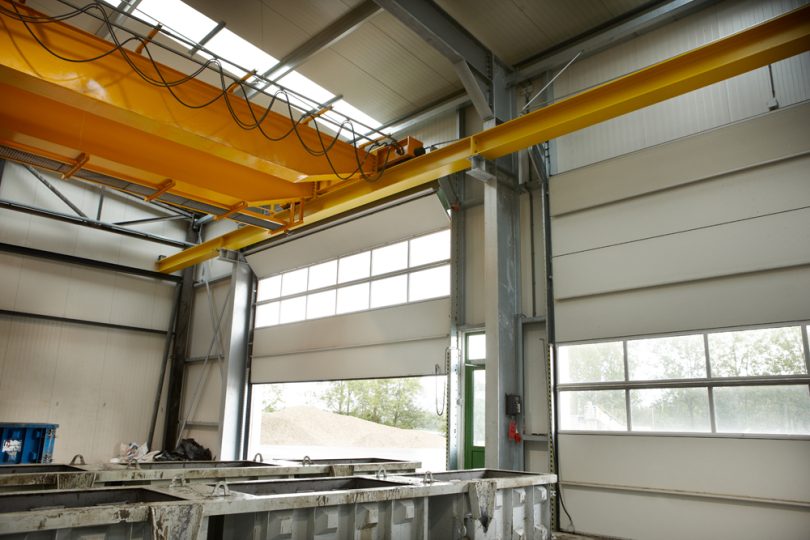
In many renovation projects, technical installations such as cranes, ventilation systems, or sprinkler systems are already in place—and moving them isn’t always an option. Adjusting these systems can quickly increase costs and extend project timelines.
Because a Compact door doesn’t require overhead tracks, it avoids conflicts with these installations. The result is fewer adjustments, less disruption, and a smoother renovation process.
Installation time matters more than you think
Replacement work often takes place while daily operations continue, meaning downtime needs to be kept to a minimum.
Door systems with complex track configurations typically take longer to install and often require additional on-site adjustments.
A Compact door is designed with simplicity in mind. With fewer components and no ceiling tracks, installation is generally more straightforward—helping you get back to business faster.
Improvement – inside and out
Door replacement is usually triggered by necessity. An existing door reaches the end of its lifespan or becomes damaged.
However, a replacement project also offers an opportunity to improve rather than simply replace. On the outside, a new door can give the building a more modern and refined appearance. On the inside, adding windows can increase natural daylight and improve the working environment. Think about how you can improve your building’s appearance and functionality instead of going for just a replacement door.
Don’t overlook maintenance costs
Older doors are more likely to break down or require replacement parts. It’s easy to assume that any new door will significantly reduce maintenance costs—but that’s not always the case.
Some door types, such as overhead doors, can come with relatively high maintenance costs. Larger industrial doors that are used frequently may require torsion spring replacements every few years—costs that can add up over time and even outweigh the initial purchase price.
If maintenance costs are an important factor, it’s worth considering solutions without torsion springs, such as the Compact folding door.
Working with constraints, not against them
Renovation projects are defined by their constraints. Limited space, existing installations, and fixed structures leave little room for standard solutions.
That’s why door selection becomes more than a technical decision—it directly impacts how the space can be used, how smoothly a project runs, and how the building performs in the long term.
Choosing a solution that adapts to the building, rather than forcing the building to adapt, can prevent unnecessary compromises. It allows you to make the most of the available space, avoid costly adjustments, and achieve a result that works—both functionally and visually.