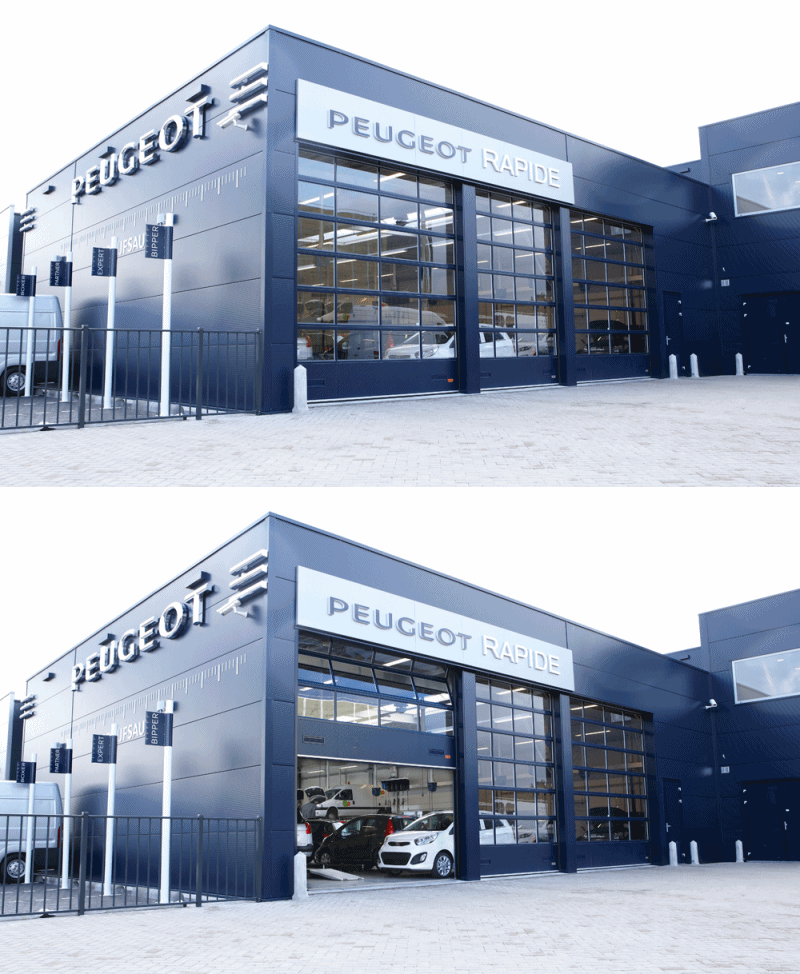
A sectional door is a popular solution for industrial buildings, workshops and garages. It is robust, insulated and performs reliably in many situations. But an important question for many businesses is:
How much maintenance does a sectional door require?
In this article, we take a closer look at maintenance, which parts are subject to wear and tear, and how you can reduce operating costs.
How does a sectional door work?
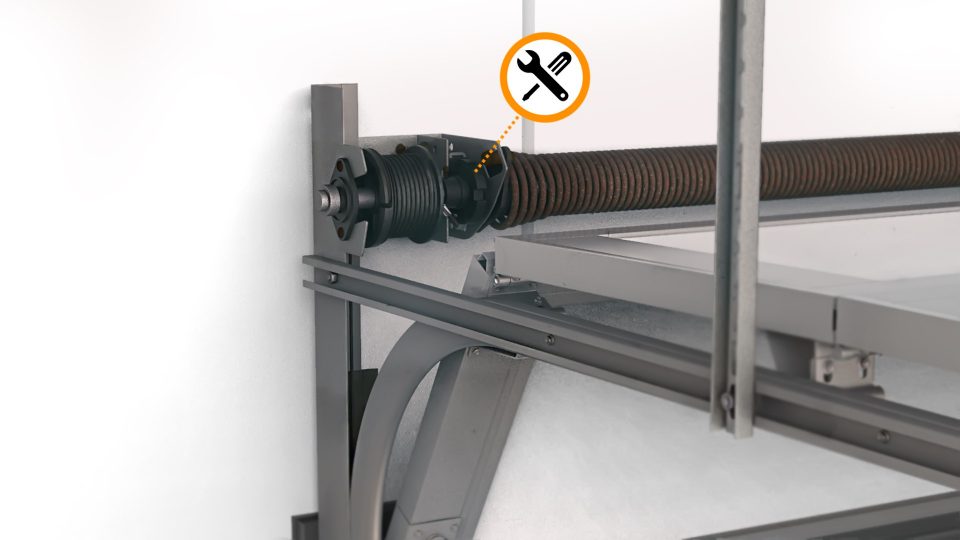
A sectional door consists of several panels that move along tracks and are lifted up into the ceiling. To make the door easy to open, torsion springs are used to balance the weight.
It is precisely these components that play a major role when it comes to maintenance.
Key maintenance points
A sectional overhead door requires regular servicing to ensure it operates safely and smoothly. The parts that require the most maintenance are:
1. Torsion springs
The springs are under constant strain and wear out over time. They typically need to be replaced after a certain number of open/close cycles. With intensive use, this may mean replacement every couple of years.
2. Rail system and moving parts
Rails, wheels and hinges must be lubricated regularly to ensure smooth operation. Failure to lubricate can lead to increased wear and noise.
3. Cables and fittings
Lifting cables and fittings must be inspected for wear and damage. If they fail, this can affect the door’s safety.
4. Motor and control system
The electric motor and control system are essential to the door’s operation. Wear on the motor, faults in the control system or sensors can result in the door failing to open or close correctly. Regular checks ensure that the system operates reliably and safely.
5. Safety systems
Modern sectional doors are equipped with safety systems such as anti-pinch protection, photocells or emergency stops. These systems must be tested regularly to ensure they respond correctly to obstacles. Lack of maintenance can lead to dangerous situations.
6. Seals and insulation
Seals along the sides and bottom of the door wear out over time. If they become damaged, this can lead to draughts, heat loss and the ingress of dust or water. This is particularly important in industrial buildings for both comfort and energy efficiency.
What does this mean in practice?
In practice, this means that a sectional door requires:
- Regular inspection (typically annually)
- Replacement of wear parts such as springs
- Ongoing lubrication and adjustment
With intensive use – for example, in an industrial hall – maintenance costs can become significant over time.
Disadvantages of maintenance
Although a sectional door is a tried-and-tested solution, maintenance has some clear disadvantages:
Firstly, wear and tear on springs and moving parts can lead to unexpected breakdowns. Secondly, maintenance and repairs can incur additional costs. Finally, regular servicing can result in downtime in production or logistics.
A low-maintenance alternative: the Compact door
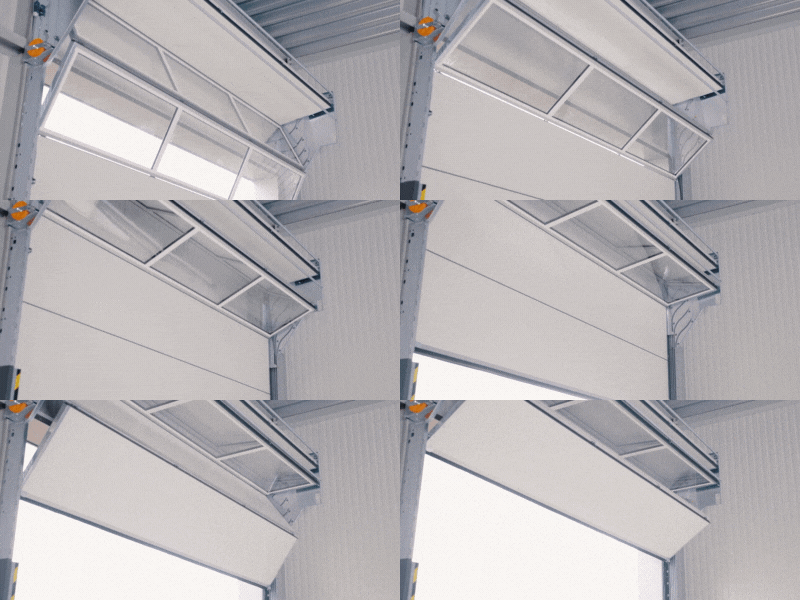
If you wish to reduce maintenance whilst optimising space in your building, the Compact door (folding door) is a strong alternative to the traditional sectional door.
Unlike a classic sectional door, which moves along tracks under the ceiling, the Compact door’s panels fold compactly together just above the opening. This means there is no need for long ceiling tracks, and the entire ceiling area remains free for installations such as lighting, ventilation or crane runways.
Another major advantage is that the Compact industrial door does not use torsion springs. Whereas traditional sectional doors rely on springs that wear out and need to be replaced regularly, the Compact door eliminates this vulnerable component entirely. The result is fewer wear parts, less maintenance and lower operating costs.
Furthermore, the smart folding system provides a more stable and controlled movement, reducing noise and wear on the components. The door is TÜV-tested for up to 100,000 cycles, making it ideal for intensive use in industry and logistics.
The Compact door thus combines space-saving design, high operational reliability and low maintenance – three key benefits in modern commercial buildings where efficiency and continuous operation are crucial.
Where is the Compact door used?
The Compact door is particularly well-suited to environments where space, reliability and low maintenance are essential. It is often used in workshops and industrial halls, where the door opens and closes many times a day. In logistics centres and warehouses, it ensures efficient throughput without obstructing the ceiling space.
It is also ideal in buildings with technical installations such as crane runways, ventilation systems or cable trays, as the ceiling remains completely clear. In fire stations, fast and reliable opening is essential, whilst in agricultural buildings and production environments it offers robustness and minimal maintenance – even under demanding conditions.
In short, the Compact door is a flexible solution for any location where a traditional sectional door restricts space or requires too much maintenance.
Conclusion
So how much maintenance does a sectional door require?
It requires regular maintenance, particularly due to the torsion springs, tracks and moving parts.
For many businesses, this is an acceptable solution, but if you want lower maintenance, fewer downtimes and greater reliability, it may be worth considering a modern solution such as the Compact door.
Are you looking for a door that fits your building, application and maintenance requirements perfectly? With the online configurator, you can easily put together your ideal door. You choose the dimensions, design, glazing and motorisation yourself, tailored to your specific situation.
You can immediately see how the door works and how it fits into your space. Once you have configured the door, you will receive a no-obligation quote that is fully tailored to your requirements. This allows you to make an informed choice of a sustainable and efficient solution.