Overhead door systems are widely used in industrial, commercial, and even residential environments. They are known for their ability to provide secure access while maximizing space around the doorway. From warehouses and garages to production halls and logistics facilities, overhead doors are everywhere.
But while they may look simple from the outside, overhead door systems rely on a combination of mechanical components that require proper installation, maintenance, and sometimes replacement.
In this blog, we take a look at how overhead door systems work, the most common challenges users face, and a modern alternative that solves many of these issues.
What are overhead door systems?
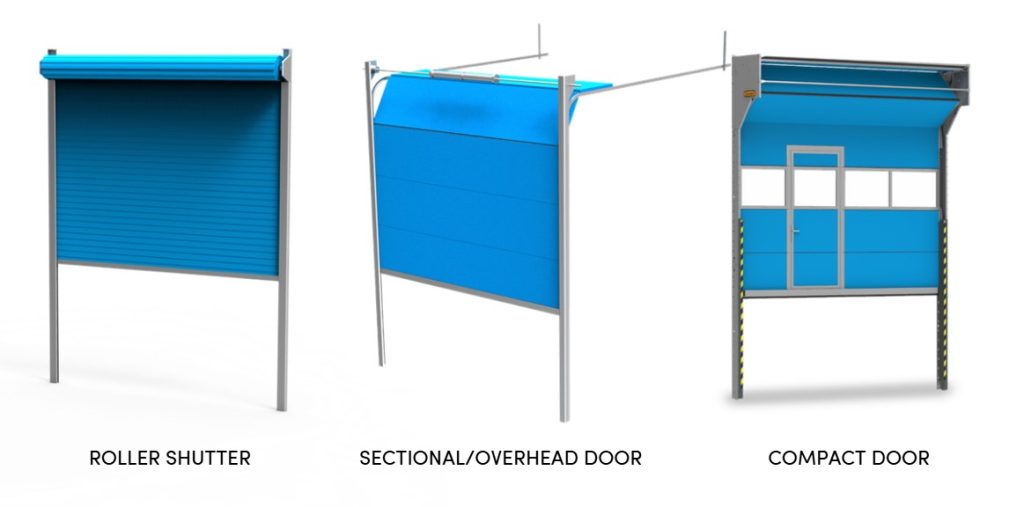
A roller shutter door offers a space-efficient solution by using narrow horizontal slats that hinge together and roll up into a compact barrel above the opening. Because the curtain rolls vertically, the system eliminates the need for ceiling tracks, which makes it ideal for situations with limited headroom or where the ceiling must remain free. Industrial and commercial environments commonly use roller shutter doors because they combine simplicity, durability, and easy automation.
A sectional door consists of large horizontal panels that are connected with hinges. When the door opens, the panels move vertically upwards and then slide horizontally along ceiling-mounted tracks. This allows the door to open without swinging outward, saving space in front of the building. Sectional doors offer good thermal insulation, design flexibility, and smooth operation, which makes them a popular choice for warehouses, loading bays, and residential garages.
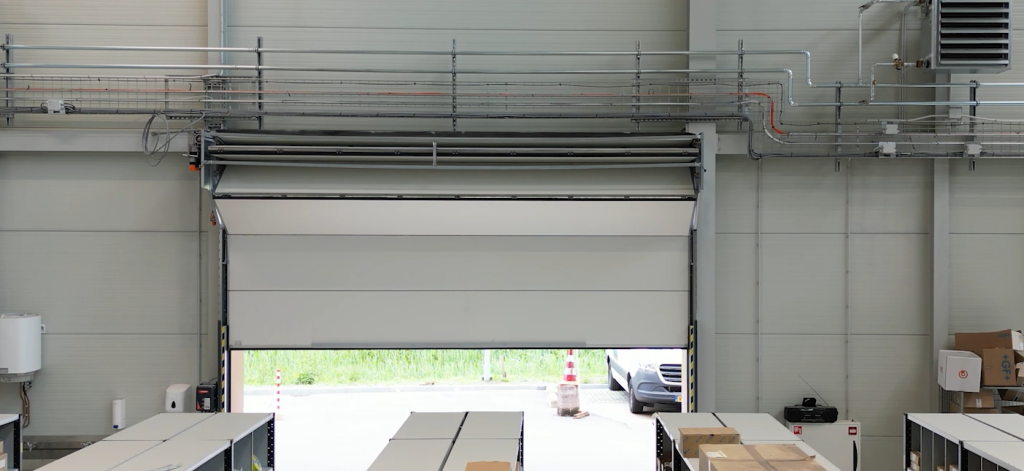
A Compact folding door opens vertically and stacks its individual panels directly above the door opening, without using ceiling tracks or a roll-up barrel. The system guides the panels upward and stacks them neatly into a compact bundle, keeping both the ceiling and the area around the opening free. This design makes the Compact door particularly suitable for buildings that require overhead space for lighting, cranes, or ventilation, and where a clean, architectural appearance is important.
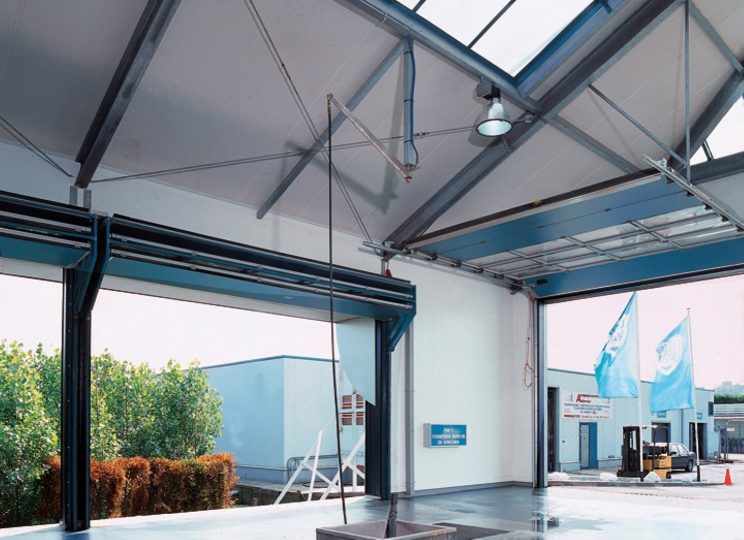
An overhead door system consists of large door panels (or a single sheet of material) that move vertically and then line up horizontally under the ceiling. This design keeps the door out of the way when open, which is why it’s particularly popular in industrial environments with high traffic.
Most overhead doors include the following components:
- Door panels or sections
- Torsion springs to counterbalance the door weight
- Tracks and rollers for guiding the door
- Cables and brackets
- Motor or manual lifting system
When functioning properly, these parts work together to lift the heavy door smoothly and safely.
How overhead door systems operate
Traditional overhead doors use torsion springs that store mechanical energy. As the door opens, the springs unwind, assisting in lifting the door’s weight. When the door closes, the springs wind back up.
This system ensures that even heavy industrial doors can be operated with relatively little force.
However, this mechanical approach also introduces several points of wear and potential failure.
Common challenges with overhead door systems
Although overhead door systems are widely used, they are not without drawbacks. Over time, businesses often encounter issues such as:
- Spring Wear and Breakage: Torsion springs are the heart of an overhead door. When they fail—which they inevitably do—the door becomes difficult or impossible to open. Spring replacement can be costly and disruptive.
- Space Limitations: Traditional overhead doors require ceiling space for their tracks. This can interfere with lighting, cranes, sprinkler systems, or other equipment suspended from the ceiling.
- Frequent Maintenance: With many moving parts under tension, regular inspections and maintenance are essential to keep overhead doors safe and reliable.
- Noise: Metal tracks, rollers, and springs often produce noise during operation—something that can be bothersome in environments where comfort or quietness is important.
- Downtime: When an overhead door stops working, it often blocks an important passageway, slowing down operations or halting workflow entirely.
A modern alternative: The Compact door
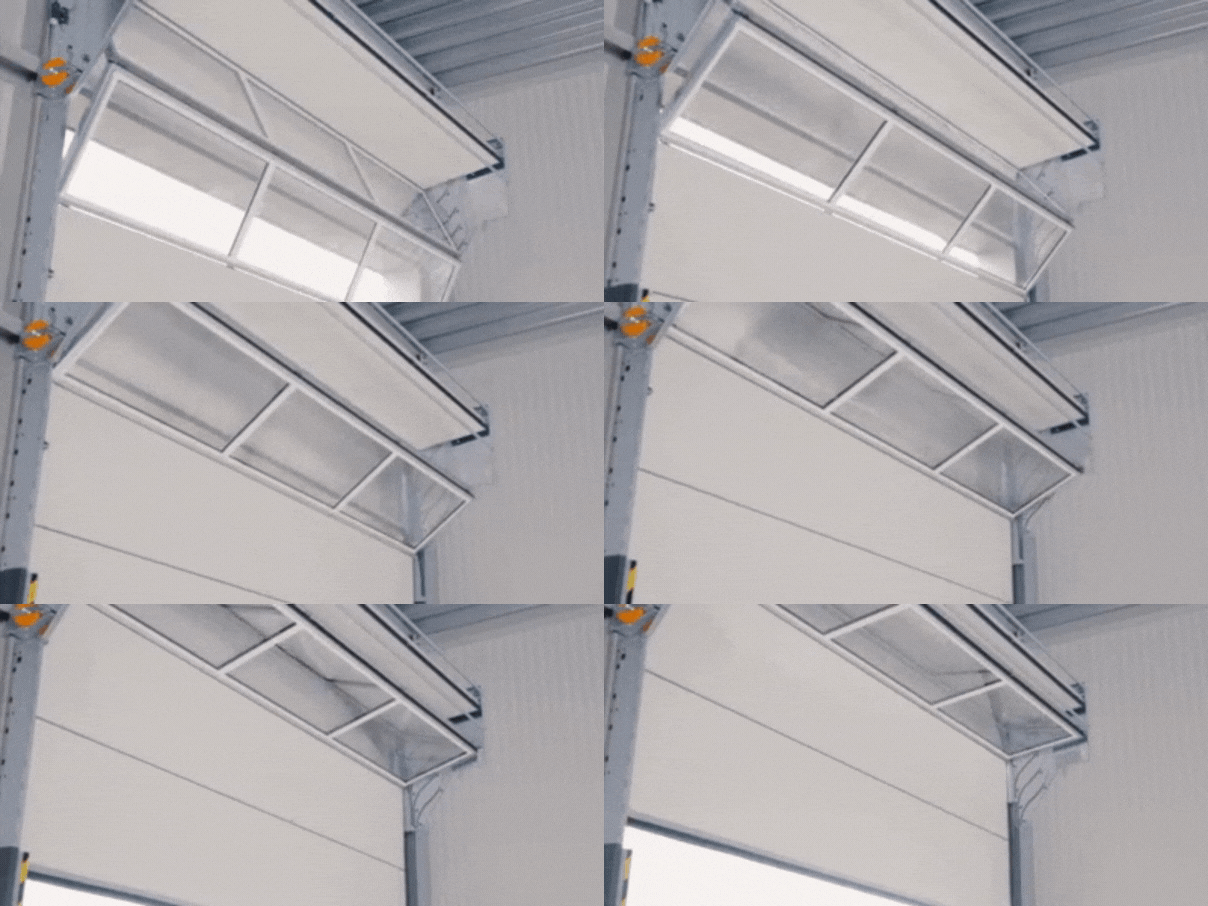
While traditional overhead systems have been used for decades, new technologies offer businesses an opportunity to rethink their door setup. One such solution is the Compact door, a folding industrial door designed to eliminate the drawbacks of traditional overhead systems.
What makes the Compact door different?
- No torsion springs
The Compact door doesn’t rely on overhead springs, eliminating one of the biggest maintenance concerns. - No ceiling tracks
Its unique folding system stacks panels above the opening, freeing valuable ceiling space. - Low maintenance
With fewer moving parts and no high-tension components, maintenance requirements drop significantly. - Quiet and smooth operation
Ideal for workplaces where noise needs to be minimized. - Flexible design options
The Compact door can be customized with windows, translucent panels, or even full-glass designs.
For companies dealing with frequent overhead door issues, the Compact door is a modern solution that boosts efficiency, safety, and reliability.
When should you consider upgrading your overhead door system?
You may want to switch to a more advanced system if:
- You face frequent spring replacements
- Your ceiling layout conflicts with overhead tracks
- You want to reduce downtime and maintenance costs
- Noise levels matter in your environment
- You are modernizing or expanding your facility
- You prefer a sleek, space-saving design
An upgrade to the Compact door could solve many of these challenges at once.
Conclusion
Overhead door systems have served industries well for many years, but they come with limitations—especially when it comes to maintenance, space usage, and operational efficiency. As businesses look for smarter and more reliable solutions, the Compact door stands out as a practical and innovative alternative.
Whether you’re replacing an old overhead door or designing a new facility, it may be the perfect time to explore what the Compact door can offer.